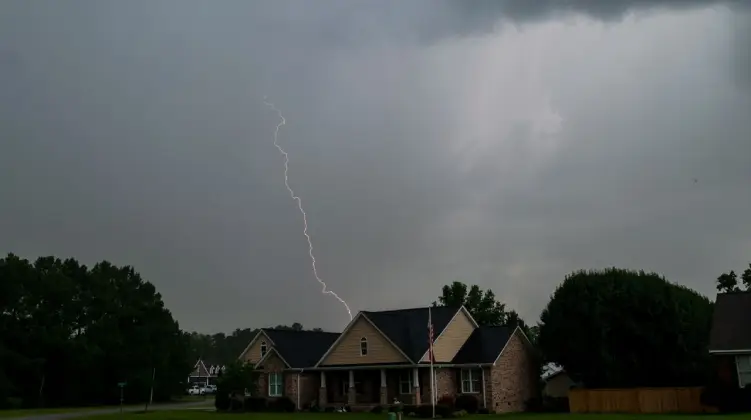
After a major storm tears through your area, most homeowners instinctively check for the obvious damage — downed trees, broken windows, missing shingles. What’s easy to forget, though, is that some of the most serious storm-related problems hide in plain sight or develop quietly over days and weeks, making them nearly impossible to catch during a quick post-storm walkthrough. Ignoring these subtler warning signs can lead to costly repairs, structural compromise, and serious health hazards like mold. Knowing what to look for beyond the surface level isn’t just smart — it’s essential.
Granule Loss on Your Roof Shingles
One of the most commonly overlooked signs of storm damage is granule loss from asphalt shingles. After a hailstorm or heavy wind event, shingles may look perfectly intact from the ground while having quietly shed a significant portion of their protective granule coating. A telltale sign? Look for an unusual accumulation of dark, sand-like granules collecting in your gutters or pooling near your downspouts after the storm passes. That granule loss exposes the underlying asphalt layer directly to UV rays and moisture, which dramatically shortens the lifespan of your roof. Left unaddressed, the damage progresses into leaks, rot, and eventually a full roof replacement far sooner than anyone would want.
Subtle Interior Water Stains
Water stains on ceilings or walls are surprisingly easy to dismiss — especially when they appear small or feel dry to the touch after a storm. A lot of homeowners assume that if there’s no active drip, there’s no real problem, but that reasoning can be dangerously misleading. A faint yellow or brown ring on your ceiling may signal that water has already worked its way into your roof deck or insulation and is slowly spreading outward. Over time, that trapped moisture creates ideal conditions for mold and mildew growth, both of which can seriously affect indoor air quality and trigger respiratory problems. Any new or expanding stain that appears following a storm deserves immediate attention — no matter how minor it looks at first glance.
Damaged or Shifted Flashing
Roof flashing — those thin metal strips that seal the transitions between your roof and features like chimneys, skylights, and vents — is frequently damaged during high-wind events without anyone realizing it. Because flashing tends to be tucked away or partially hidden from view, most homeowners never think to inspect it after a storm rolls through. Even a slight shift or bend in the flashing can open a gap wide enough for water to seep steadily into your home with every subsequent rainfall. This kind of damage accelerates quickly when left unrepaired, eventually leading to wood rot, ceiling deterioration, and potential mold infestations throughout the structure. When assessing flashing damage after a severe storm, a Memphis-based restoration company can perform a thorough post-storm inspection to identify compromised areas that most homeowners would never catch on their own.
Foundation Cracks and Soil Erosion
Storms that bring heavy, sustained rainfall can quietly but dramatically alter the soil surrounding your home’s foundation. Erosion and hydrostatic pressure from waterlogged ground can push against foundation walls, generating hairline cracks that are remarkably easy to overlook at first glance. Those small cracks may seem purely cosmetic, but they quickly become entry points for water — water that expands and contracts with temperature swings and steadily widens the damage over time. Pooling water near your foundation after a storm is a serious red flag that your grading or drainage may have been compromised.
Clogged or Detached Gutters
Gutters are specifically designed to direct water safely away from your home, but storms can clog, bend, or fully detach them from the fascia board in surprisingly short order. When gutters stop functioning properly, water overflows and cascades down the side of your home, saturating the soil near your foundation and potentially infiltrating your basement or crawlspace. Many homeowners clean their gutters once or twice a year but fail to give them a closer look after every significant storm — which is where problems quietly take root. A gutter that appears securely attached from street level may actually have loosened fasteners ready to give way during the very next rainfall.
Conclusion
Storm damage is rarely limited to what’s immediately visible. Granule loss, interior stains, flashing damage, foundation issues, and gutter failures all represent the kind of problems that worsen silently when left uninspected. Proactively examining your property after every significant storm is the most reliable way to catch small issues before they escalate into major structural repairs. When something doesn’t look quite right — or when you’re simply not sure — consulting a professional restoration specialist ensures nothing gets missed and that your home stays safe, secure, and protected for the long haul.